


Adolescence is a time of tremendous change. Teens are developing their identities, managing academic pressure, navigating social dynamics, and experiencing a surge of emotions, all while their brains are still maturing. For parents, it can be hard to distinguish between typical teenage behavior and signs of mental health issues in teens that require professional attention.
The truth is that many teens who are struggling emotionally do not ask for help outright. They may not even have the words to describe what they are feeling. That is why recognizing the warning signs early is one of the most important things a parent can do. At CompassionTeens, we work with families every day to identify these signs and connect teens with the care they need, including our flexible Virtual IOP (Intensive Outpatient Program) for adolescents across California.
Why Teens Often Hide Emotional Struggles
Before exploring the specific signs, it is important to understand why so many teens suffer in silence. Adolescents are acutely aware of how they appear to their peers. Admitting to feeling overwhelmed, anxious, or depressed can feel like a sign of weakness. They may fear being judged, labeled, or treated differently. In some cases, they genuinely do not realize that what they are experiencing is not normal; they may assume everyone feels the same way they do.
This is why parent awareness is so powerful. When you know what to look for, you can start a conversation before a small struggle becomes a crisis.
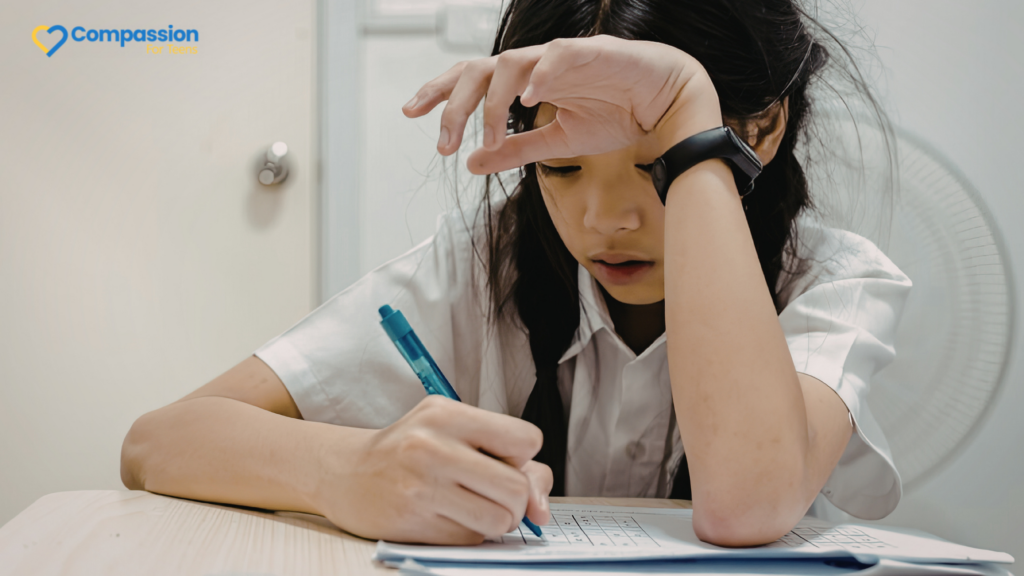
Top Signs of Mental Health Issues in Teens
1. Persistent Mood Changes
All teenagers have ups and downs. But when low moods, irritability, or emotional numbness persist for two weeks or more, it may be one of the clearest signs of mental health issues in teens. Pay attention to whether your teen seems persistently sad, hopeless, or unusually angry, especially if this represents a change from their baseline personality.
2. Withdrawal from Family and Friends
Social connection is vital to teen development. When a teenager begins pulling away from close friends, stops participating in activities they once loved, or becomes increasingly isolated, it is worth paying attention. Social withdrawal is one of the most common early signs of depression and anxiety in adolescents.
3. Declining Academic Performance
A sudden drop in grades, frequent absences from school, or a loss of motivation to complete assignments can all signal emotional distress. When a previously engaged student starts struggling academically without a clear external cause, it is often a reflection of what is happening internally.
4. Changes in Sleep Patterns
Sleep disturbances are closely linked to mental health. A teen who suddenly cannot fall asleep, sleeps far more than usual, or seems exhausted despite adequate rest may be dealing with anxiety, depression, or another mental health condition. Healthy sleep is essential to emotional regulation, so disruptions in this area are an important signal.
5. Changes in Appetite or Weight
Significant changes in eating habits, such as eating far more or far less than usual, skipping meals frequently, or expressing distorted views about food and body image, can be signs of emotional distress or an emerging eating disorder. Both conditions are treatable, but early intervention is key.
6. Increased Risk-Taking Behavior
When teens begin engaging in reckless behavior such as substance use, unsafe sexual activity, dangerous driving, or other impulsive actions, it is often a way of coping with emotional pain they do not know how to process. This is not just rebelliousness. It is often a cry for help expressed through behavior.
7. Physical Complaints Without Medical Cause
Teens experiencing anxiety or depression frequently report physical symptoms: headaches, stomachaches, fatigue, or chest tightness. When medical evaluations come back normal, but the symptoms persist, the underlying cause is often emotional. This is the body’s way of expressing what the mind has not yet found words for.
8. Expressions of Hopelessness or Self-Worth Issues
Comments like “nothing matters,” “I’m useless,” or “I wish I wasn’t here” should always be taken seriously, even if delivered casually. These expressions may reflect deep emotional pain and should prompt an immediate conversation with a mental health professional.
9. Self-Harm
Self-harm, including cutting, burning, or other forms of self-injury, is a serious sign that a teen is in significant emotional pain and does not have healthy coping strategies. It is not attention-seeking behavior. It is a symptom that requires compassionate, professional care immediately.
10. Increased Secrecy or Lying
While some degree of privacy is healthy in adolescence, a sudden and dramatic increase in secrecy, hiding devices, being dishonest about whereabouts, or becoming defensive when asked simple questions may suggest something is going on that the teen is afraid or ashamed to share.
What to Do When You Notice These Signs
If you recognize several of these signs in your teen, the most important thing you can do is approach them with calm curiosity rather than alarm. Start a non-judgmental conversation. Let them know you have noticed changes and that you are there for them. Avoid immediately launching into problem-solving mode; teens need to feel heard before they feel helped.
Once the conversation has begun, reach out to a mental health professional who specializes in adolescents. At CompassionTeens, our intake team is available to help you assess what level of care may be appropriate for your teen.
How Virtual IOP Can Help
For many teens, a standard weekly therapy appointment is not enough support when they are in the middle of an emotional crisis. That is where our Virtual IOP at CompassionTeens makes a meaningful difference.
Our Virtual Intensive Outpatient Program provides teens with structured, clinically rigorous care multiple sessions per week, including individual therapy, group therapy, and family sessions, all from the comfort of home. Virtual IOP is ideal for teens who:
- Need more support than weekly therapy provides
- Face transportation or scheduling barriers to in-person care
- Feel more comfortable opening up in a familiar environment
- Are you managing school, sports, or other commitments alongside treatment
- Have completed a higher level of care and are stepping down
Our Virtual IOP is delivered by licensed adolescent therapists, is HIPAA-secure, and accepts most major insurance plans. We serve teens ages 12 to 17 across California, making quality mental health care accessible regardless of location.
Also Read: What Is a Virtual Intensive Outpatient Program (IOP) for Teens? How It Works & Who It’s For
Early Intervention Changes Everything
The earlier a teen receives support for emotional struggles, the better the outcomes. Research consistently shows that adolescents who receive timely, appropriate mental health treatment are more likely to develop healthy coping skills, maintain academic success, and build fulfilling relationships both now and into adulthood.
You do not have to have all the answers as a parent. You just have to take the first step.
If you are seeing signs of mental health issues in your teen, reach out to CompassionTeens today. Our Virtual IOP and in-person programs are available for teens ages 12–17. Visit compassionteens.com or call us to get started.